

Start the New Year Fresh: Is Raw Feeding Right for Your Dog?
You've been thinking about it for a while now. Maybe you've seen other dog owners talk about raw feeding, or maybe your dog just isn't thriving on kibble the way you hoped. This year, you're wondering if it's time to make a change.
If you're on the fence about raw feeding, you're not alone. Most people spend months researching before they make the switch. That's smart. This is a big decision, and you want to get it right.
Let's talk through what raw feeding actually looks like, what it costs, and whether it makes sense for you and your dog.
What's Really Happening with Kibble
Here's the thing most dog food companies don't want you to think about too hard. Kibble has to be processed at extremely high temperatures to form those little pellets. That heat destroys a lot of the natural nutrients in the ingredients, which is why manufacturers add synthetic vitamins and minerals back in at the end.
It's shelf-stable, convenient, and affordable. Those are real advantages. But it's not what your dog's digestive system evolved to process.
Dogs have short, acidic digestive tracts designed for raw meat and bone. Their stomach acid is strong enough to break down bacteria that would make us sick. When you feed kibble, you're asking their system to work in a way it wasn't designed for.
Does that mean every dog on kibble is unhealthy? No. Plenty of dogs do fine on high-quality kibble. But if your dog is dealing with chronic issues like itchy skin, dull coat, low energy, or digestive problems, their food might be part of the problem.

What Raw Feeding Actually Looks Like
Raw feeding isn't as complicated as some people make it sound, but it's not just throwing a steak in a bowl either.
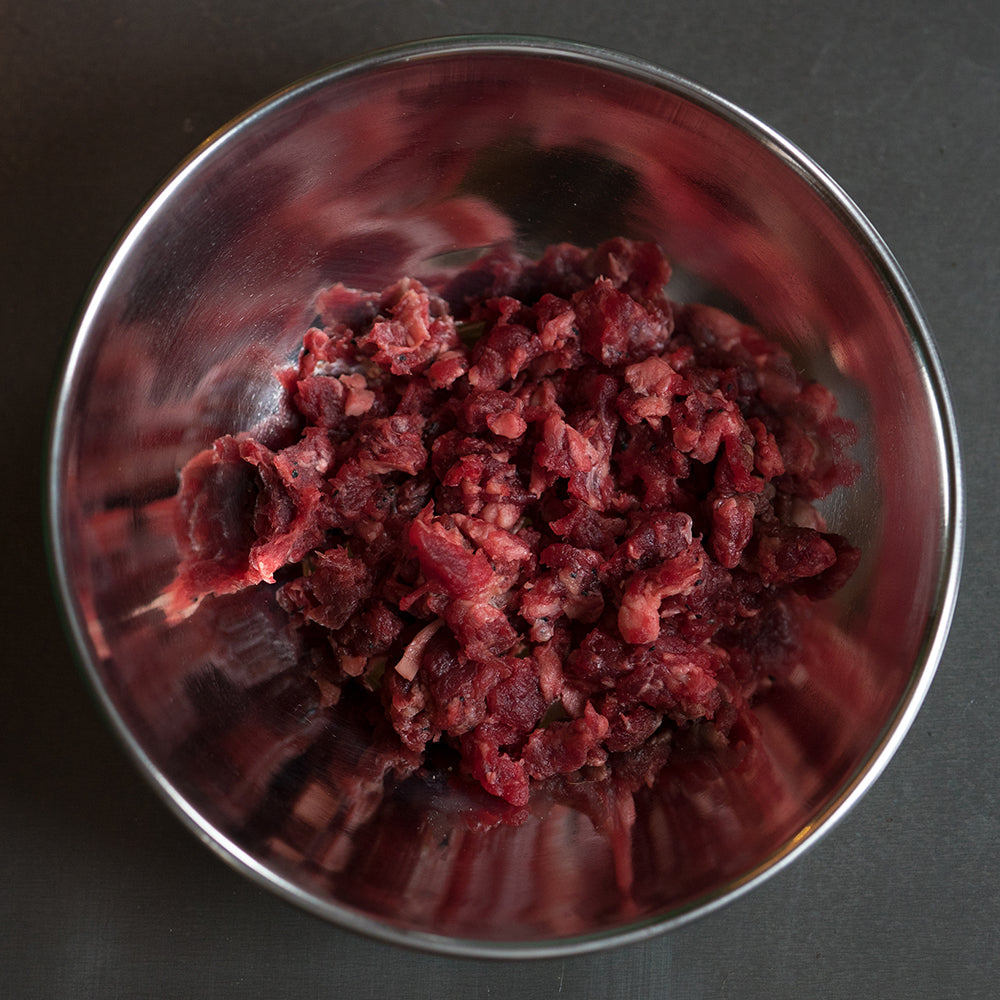
The foundation of most raw diets is simple. You're feeding muscle meat for protein and energy, ground bone for calcium and minerals, and organ meat for vitamins. That's it. No grains, no fillers, no synthetic vitamins trying to replace what was cooked out.
Some people build their own raw meals from scratch, weighing ingredients and calculating ratios. That works for them, but most raw feeders keep it simpler. They buy pre-made blends that include everything their dog needs in the right proportions. You thaw it, portion it, serve it. The dog eats real food.
The transition takes about a week or two. You gradually mix raw food into your dog's current food until they're eating 100% raw. Most dogs adjust without any issues. Some need a little more time. Either way, it's not the dramatic shift people worry about.
The Questions That Stop People
If you're hesitating, it's probably because of one of these concerns. Let's address them honestly.
"Isn't raw food dangerous because of bacteria?"
This is the big one. People worry about Salmonella or E. coli, and those bacteria do exist in raw meat. But dogs are built to handle it. Their stomach acid is about 10 times stronger than ours, and their digestive tract is short, which means bacteria doesn't have time to colonize the way it could in a human gut.
You do need to practice basic food safety. Keep raw food frozen until you're ready to use it. Thaw it in the fridge, not on the counter. Wash your hands and your dog's bowls after feeding. The same precautions you'd use when handling raw meat for yourself.
"What if my dog doesn't like it?"
This almost never happens. Our raw food smells and tastes like real meat because it is real meat. Most dogs get more excited about mealtime when they switch to raw, not less.
If your dog is hesitant at first, it usually means they're just not used to it. Start with a very small amount mixed into their current food. Dogs who've been on kibble their whole lives sometimes need a few days to adjust to the texture and temperature.
"Do I need to add supplements or calculate nutrients?"
Not if you're using a complete raw diet that includes muscle meat, bone, and organs. Those three components naturally contain everything your dog needs. But we always recommend consulting a vet for your dog’s specific needs.
"Can I still feed raw if I have kids or a small kitchen?"
Yes, with normal food safety practices. Keep raw food sealed in the freezer. Thaw it in a container in the fridge. Feed your dog in an area you can easily clean. Wash your hands afterward. It's the same precautions you'd take if you were handling raw chicken for dinner.
If you're really concerned about handling raw meat, our freeze-dried raw is an amazing option. It has the same nutritional benefits as frozen raw but doesn't require the same level of handling. You just scoop it, rehydrate it, and serve.
What Makes Good Raw Food
Not all raw food is created equal. Some companies are sourcing quality meat and processing it safely. Others are cutting corners.
You want to know what's in it. Muscle meat, ground bone, and organ meat in the right ratios. No mystery ingredients, no "meal," no fillers. If you can't tell what's in the package, that's a red flag.
And honestly, you want to buy from people who understand raw feeding, not just people who saw a market opportunity. There's a difference between a company that's been doing this for decades and a brand that launched last year because raw food is trendy.
We've been processing beef for raw feeding for 35 years. No middlemen, no rendering plants, no guessing. You know exactly what your dog is eating because we control every step.
Making the Decision
So is raw feeding right for you? That depends on what matters most.
If you want to feed your dog real, whole food that matches their biology, raw makes sense. If you're dealing with chronic health issues that haven't improved with kibble, raw is worth trying. If you want to know exactly what's going into your dog's body, raw gives you that clarity.
There's no moral judgment here. You're not a bad dog owner if you don't feed raw. But if you've been curious, if you've been researching, if you've been wondering whether it would make a difference for your dog, this might be the year to find out.
If You're Ready to Try
Start with a complete blend that includes muscle meat, bone, and organs so you don't have to worry about balancing nutrients yourself. Our Legacy BLT & Bone blend is what most people start with because it's straightforward and well-balanced.
Give it a fair shot. That means at least a month, ideally two, so you can see the full effects. Watch your dog's coat, their energy, their digestion. You'll know pretty quickly if it's making a difference.
The New Year is a Good Time to Start
There's something about January that makes change feel possible. You're already thinking about what you want to improve this year. Maybe one of those things is giving your dog a better shot at health.
Raw feeding isn't a magic cure. It won't fix everything. But it gives your dog nutrition that works with their biology instead of against it. For a lot of dogs, that makes all the difference.
If you've been on the fence, maybe this is your sign to try.
Disclaimer: Always consult your veterinarian before changing your dog's diet, especially for puppies or dogs with existing health conditions.