
What High-Energy Breeds Like Pitbulls Actually Need From Their Food
Share
Pitbull owners tend to be more tuned in to their dog's diet than most. Partly because the breed attracts devoted owners, and partly because pitbulls have a way of making it very obvious when something isn't working. Dull coat. Restless energy that never quite settles. A dog who finishes their bowl and immediately looks at you like it wasn't enough.
A lot of that comes down to protein quality and bioavailability, and it's where raw feeding tends to make a noticeable difference for high-drive, muscular breeds.
The Protein Question
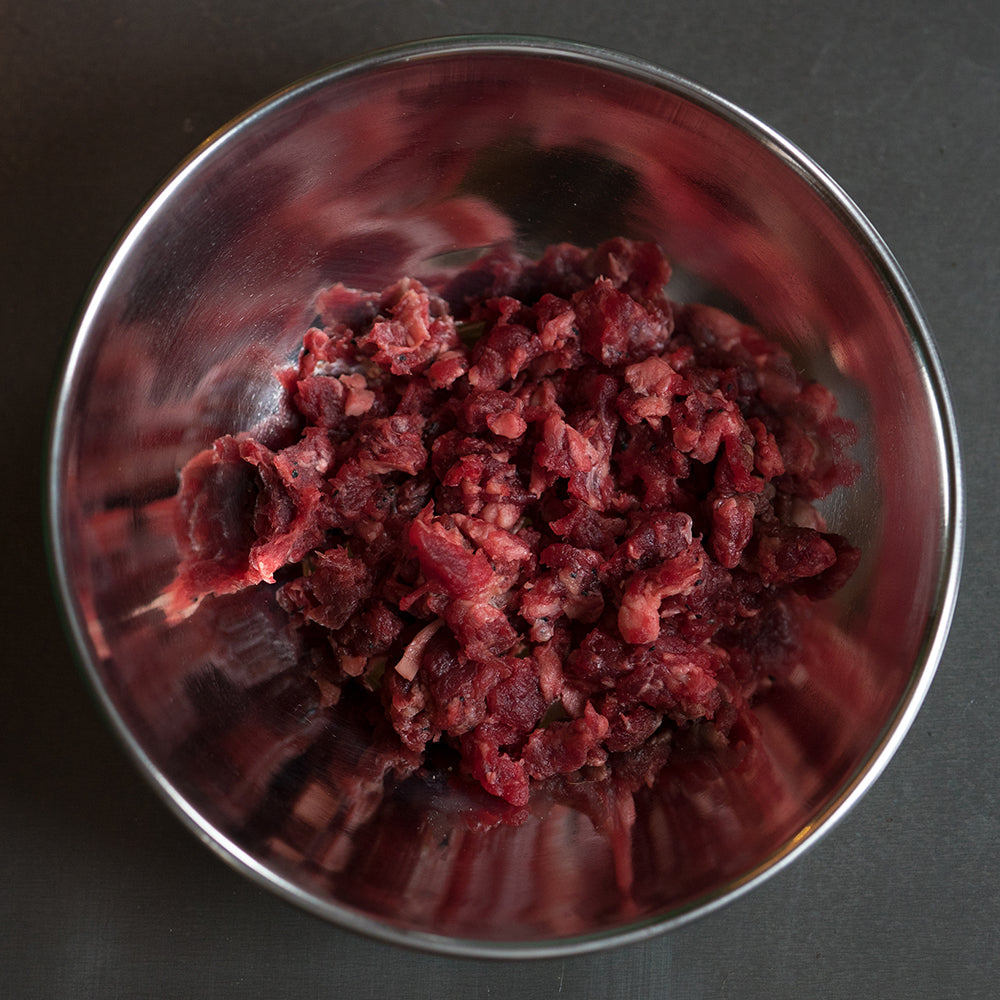
Pitbulls are athletic, muscular dogs with higher protein demands than many breeds their size. The source and quality of that protein matters as much as the quantity. Processed kibble delivers protein, but the cooking process affects how much of it a dog can actually use. Raw muscle beef provides protein in a form that's closer to what a dog's digestive system is built to handle.
Midwest Legacy Beef's raw blends start with hand-deboned muscle beef as the foundation. The Legacy BLT & Bone blend builds on that base with unwashed tripe, ground bone, liver, spleen, kidney, and heart, each contributing a different nutritional role. Tripe introduces natural enzymes and Lactobacillus Acidophilus to help support normal digestive function. Liver is a natural source of vitamin A, B vitamins, and iron. Ground bone provides calcium and phosphorus in a naturally occurring form. For a breed that puts serious demands on their body, that kind of nutritional range in a single meal is hard to replicate with processed food.
Muscle Development and Recovery
High-energy breeds aren't just burning calories during a walk. They're using their musculature constantly, and what they eat directly affects how well they maintain and recover. Raw beef is a natural source of amino acids that support normal muscle function, along with iron and zinc that play a role in normal cellular processes.
The Beef & Organ 80/10/10 blend is particularly well suited to active dogs. At 78% raw muscle beef with a hand-crafted organ blend and marrow-filled ground bone, it delivers a concentrated nutritional profile without fillers or synthetic additives. Nothing in the bag that isn't pulling its weight.
Both blends are available freeze-dried for owners who want the same nutritional profile in a shelf-stable format, whether for travel, training treats, or rotating alongside frozen raw. You can find them here.
What Raw Feeding Actually Looks Like for a Pitbull
Feeding amount for an active adult pitbull typically lands between 2% and 3% of body weight per day, adjusted based on activity level and body condition. A 60lb dog with a high activity level might sit closer to the higher end of that range. A dog who spends more time on the couch than the trail might need less.
Transition from kibble gradually over one to two weeks, introducing the raw component slowly and monitoring stool consistency as the digestive system adjusts. Firm, small, and infrequent is the target once the transition settles. MLB's feeding guide breaks down starting amounts by weight if you want a concrete reference point.
A Note on the Breed Stigma
Pitbulls get an unfair amount of scrutiny in a lot of contexts, and pet food marketing is no exception. Most commercial dog food isn't formulated with working, athletic, or high-drive breeds in mind. It's formulated for an average dog with average demands.
If you've felt like the mainstream options just aren't cutting it for your dog, that instinct is probably right. Raw feeding has a long track record with working breeds, K-9 units, and performance dogs precisely because the nutritional demands of those animals are real and specific. Midwest Legacy Beef has been feeding dogs like yours for over 35 years. Explore the full lineup here.