

What Is 80/10/10 Raw Dog Food?
Share
If you've spent any time researching raw feeding, you've seen the numbers. 80/10/10. It's one of the most searched terms in the raw dog food space, and also one of the most misunderstood.
The concept itself isn't complicated. It's a ratio that mirrors what a dog would naturally consume from whole prey. Understanding what each number represents, and why it matters, is the difference between feeding raw confidently and second-guessing every meal.
What the Numbers Actually Mean
The 80/10/10 ratio breaks down like this: 80% muscle meat, 10% raw edible bone, and 10% organ meat. That last 10% is typically split, with at least 5% coming from secreting organs like liver, and the remainder from organs such as kidney or spleen..
The logic behind the ratio comes from the idea that a dog's digestive system is built for whole prey consumption. Muscle meat provides the protein base. Bone contributes calcium and phosphorus in a naturally occurring, bioavailable form. Organs deliver concentrated nutrition including fat-soluble vitamins and minerals that muscle meat alone doesn't supply in meaningful amounts.
It's worth noting that 80/10/10 is a starting framework, not a rigid prescription. Individual dogs have different needs based on age, activity level, and health status. A working dog and a senior lap dog are not eating the same meal, even if both are technically on a raw diet.
Why Organ Meat Is the Part People Get Wrong
Most people starting out on 80/10/10 nail the muscle meat portion without much trouble. Bone takes a little more thought. Organs are where things tend to go sideways, and usually in one of two directions: either they're skipped entirely because they seem complicated, or they're added in too large an amount too quickly.
Organ meat is nutritionally dense. Beef liver, for example, is a natural source of vitamin A, B vitamins, and iron. That density is exactly why it's valuable, and also why too much at once can cause digestive upset. Starting with smaller amounts and building up gradually gives a dog's system time to adjust.
The 5% liver minimum in the 80/10/10 framework exists for a reason. Secreting organs do work that muscle meat simply can't replicate, and leaving them out creates nutritional gaps over time.
How Midwest Legacy Beef Approaches the Ratio
Formulating an 80/10/10 blend correctly requires attention to sourcing and proportion that most home preparers find genuinely difficult to maintain consistently. Midwest Legacy Beef's Beef & Organ 80/10/10 Blend takes that work off your plate.
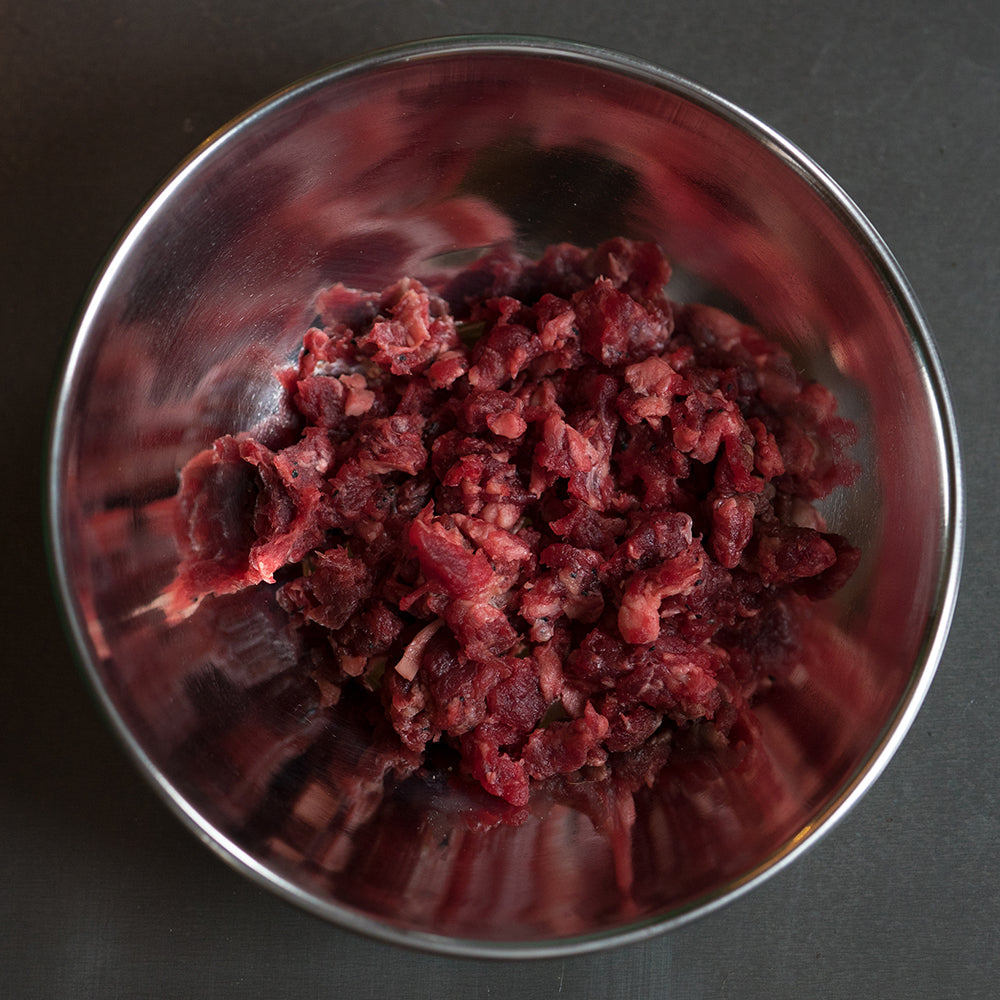
The blend is made from 78% raw muscle beef, 10% marrow-filled ground bone, 5% liver, 2.5% spleen, 2.5% kidney, and 2% heart. Every ingredient is handled in-house. The beef is hand deboned, the organ blend is hand crafted, and nothing else is added. No fillers, no synthetic additives, no guesswork about whether the ratio is actually right.
It's also available freeze-dried for situations where frozen isn't practical, travel, transition feeding, or just the convenience of a shelf-stable option that delivers the same nutritional profile as the raw version. You can find both here.
Getting Started Without Overthinking It
The biggest barrier to starting 80/10/10 isn't the ratio. It's the mental load of feeling like you need to get everything perfect on day one. You don't.
If your dog is transitioning from kibble, start with a single protein source and introduce the organ component gradually over the first two weeks. Watch their stool. Loose stools early in a transition are common and usually self-correct as the digestive system adjusts. Firm, small, and infrequent is what you're aiming for once the transition settles.
Feeding amount is typically 2% to 3% of body weight per day for adult dogs, adjusted based on activity level and body condition. MLB's feeding guide is a useful reference point if you want specific starting numbers.
The Bottom Line
The 80/10/10 raw diet is a muscle meat, bone, and organ framework built around a dog's natural nutritional needs. It's not complicated once you understand what each component does, and it doesn't require a nutrition degree to execute well. What it does require is a reliable source you can trust to get the ratio right.
If you've been curious about raw feeding but haven't known where to start, 80/10/10 is a reasonable place to land. Explore Midwest Legacy Beef's Beef & Organ 80/10/10 Blend here.